

Superabrasive Strategies for High-Temperature Turbine Components in Aerospace & Defense
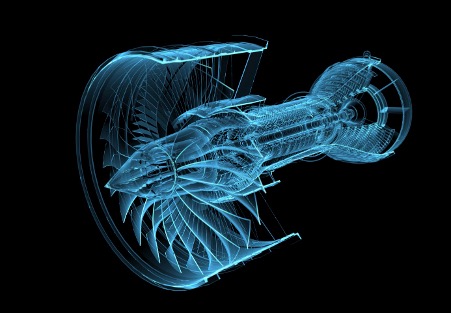
Commercial and military jet engines, along with land-based turbines all depend on the same core promise, that components keep performing under conditions that would destroy ordinary metal. White-hot combustion gases, extreme rotational stress, and decades of cyclical fatigue are simply part of the job. Nickel, cobalt, and titanium superalloys make that kind of endurance possible.
But the properties that let a turbine blade shrug off 1,000+ degree C gas temperature also make it brutally resistant to machining. Standard cutting tools dull fast, generate excess heat, and struggle to hold the tight tolerances that turbine components demand — whether they're headed for a commercial airliner, a military aircraft, or a power-generation turbine on the ground.
Abrasive Technology has developed a set of plating and bonding technologies built specifically for this challenge, giving manufacturers of high-temperature turbine components tools that cut faster, last longer, and hold the precision these applications require.

The Need for a Different Kind of Tooling
Abrasive Technology has spent over a quarter-century working alongside the world's leading aircraft engine manufacturers and land-based turbine producers. That experience shapes how the company approaches tooling. Rather than offering off-the-shelf wheels, Abrasive Technology designs and coats custom solutions for some of the most demanding components in a turbine, nozzle vanes, hangers including turbine blades and Integrated Bladed Rotors (IBRs). With each part coming with its own geometry, alloy chemistry, and tolerance requirements, a one-size-fits-all solution simply won't work.
Behind that custom-engineering approach is a team with more than 55 years of abrasive solutions. That depth of experience matters when the material in front of you doesn't forgive trial and error.
To meet the demands of turbine manufacturing, Abrasive Technology relies on two core plating technologies, electroplating and brazing — each suited to different stages and requirements of the machining process.
Electroplated Technology: Precision without a Premium Price Tag
Electroplating works through a straightforward and powerful process: an electrochemical bath mechanically traps abrasive particles, either diamond or Cubic Boron Nitride (CBN), onto a tool's surface in a single, tightly controlled layer. The result is a tool that can be manufactured to exacting, tight-tolerance forms while remaining notably more cost-effective than vitrified, resin, or metal-bonded alternatives.
For shops machining nickel- and cobalt-based super alloys, engineered ceramics, ferrous alloys, and tungsten carbide, electroplated tools deliver high material removal rates while reducing power consumption and minimizing thermal damage to the workpiece — a critical consideration when overheating can compromise a turbine component's metallurgical integrity. It's a technology that provides precision and durability without the higher upfront investment of other bonding systems.
Two applications of this electroplated technology stand out for turbine work:
Plated CBN is nearly as hard as diamond but far better suited to grinding ferrous and high-nickel alloys, which tend to react chemically with diamond at high temperatures. Plated CBN wheels are especially effective for short production runs and close-tolerance form grinding, making them a natural fit for the lower-volume, high-precision work typical of turbine manufacturing. They're engineered to machine notoriously difficult materials — nickel, cobalt, and titanium alloys — without sacrificing dimensional accuracy.
Form wheels address a different challenge: reproducing complex, contoured profiles, like those found on turbine blades, consistently across thousands of parts. Tailored for both creep-feed and high-speed grinding applications, they're engineered to handle impressive material removal rates while holding tight tolerances and intricate forms. Because the abrasive particles are mechanically locked into a single electroplated layer rather than continuously exposed through wear, form wheels retain their profile from the first cut to the last, with little to no need for time-consuming wheel dressing. That translates into less downtime and more consistent part quality. When a wheel does eventually wear, the core can often be stripped and replated instead of replacing the whole tool, extending its usable life.

P.B.S.® Braze: Engineered for the Toughest Cuts
For applications that demand even higher diamond exposure and durability, Abrasive Technology turns to a different bonding approach entirely: P.B.S.® Braze, its proprietary diamond-brazed system. Rather than embedding abrasive particles in a plated layer, P.B.S.® Braze fuses individual diamonds directly onto the tool through brazing. This produces exceptionally high diamond exposure and virtually eliminates particle pull-out, so the abrasive surface won't strip or peel during aggressive use.
The payoff is a tool that cuts faster, runs cooler, lasts longer, and resists loading — all while being custom-manufactured in non-standard sizes and forms for composite air frame applications.
Abrasive Coatings: Protecting Components Once They're in Service
Machining the part is only half the story. Once a turbine component is in service, it needs to survive years of friction, heat, and wear — and Abrasive Technology's coating systems are built to help it do exactly that.
Our Abrasive Coating is a single layer of hard abrasive particles, electroplated onto engine parts with nickel. It acts like fine-grit sandpaper against a soft seal surface, letting engines run with tighter clearances for better efficiency and safety.
Our Wear Coating is a tough coating made by electroplating chromium carbide particles into a metal base. Under heat, it forms a natural slick glaze that fights wear between moving parts. That glaze can be pre-formed with heat treatment, so it protects immediately instead of wearing in over time.
Together, these abrasive coatings extend Abrasive Technology's expertise beyond the grinding wheel itself, giving turbine manufacturers coating solutions that protect components long after machining is complete.
A Partner, Not Just a Supplier
What ties these technologies together is a manufacturing philosophy built around customization and long-term support. Beyond producing the wheels and tools themselves, Abrasive Technology assists clients with entrapment plating facility design, compliance requirements, and ongoing repair services — the kind of full-lifecycle support that aerospace and defense programs, with their long timelines and strict quality standards, depend on.

The combination of plated CBN, precision form wheels, electroplated technology, P.B.S.® Braze, and abrasive coating systems gives manufacturers of commercial engines, military engines, and land-based turbines the tooling and protection strategies needed to machine and safeguard tomorrow's high-temperature alloys with confidence today.
Beyond turbine components, Abrasive Technology also offers grinding and finishing capabilities for structures and components built from composite materials, including CFRP and GFRP, reinforced ceramic composites, friction materials, fiberglass, and more — supporting the full range of advanced materials found across aircraft, military vehicles, and other demanding platforms.
Abrasive Technology designs custom superabrasive solutions built around the specific alloys, geometries, and tolerances your program demands. Contact us at 740-548-4100 or use our contact form to find the ideal tools you need.

Custom Solutions
For Your Unique
SuperAbrasive Needs

