

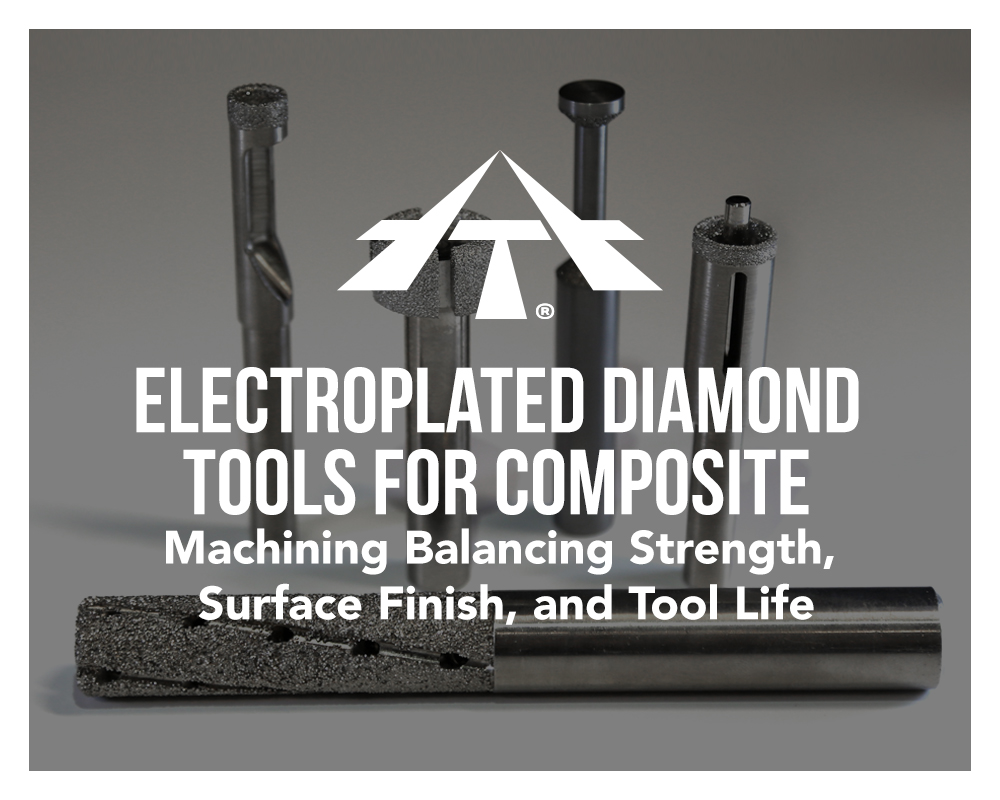
Superabrasive Diamond Tools for Composite Machining Balancing Strength, Surface Finish, and Tool Life
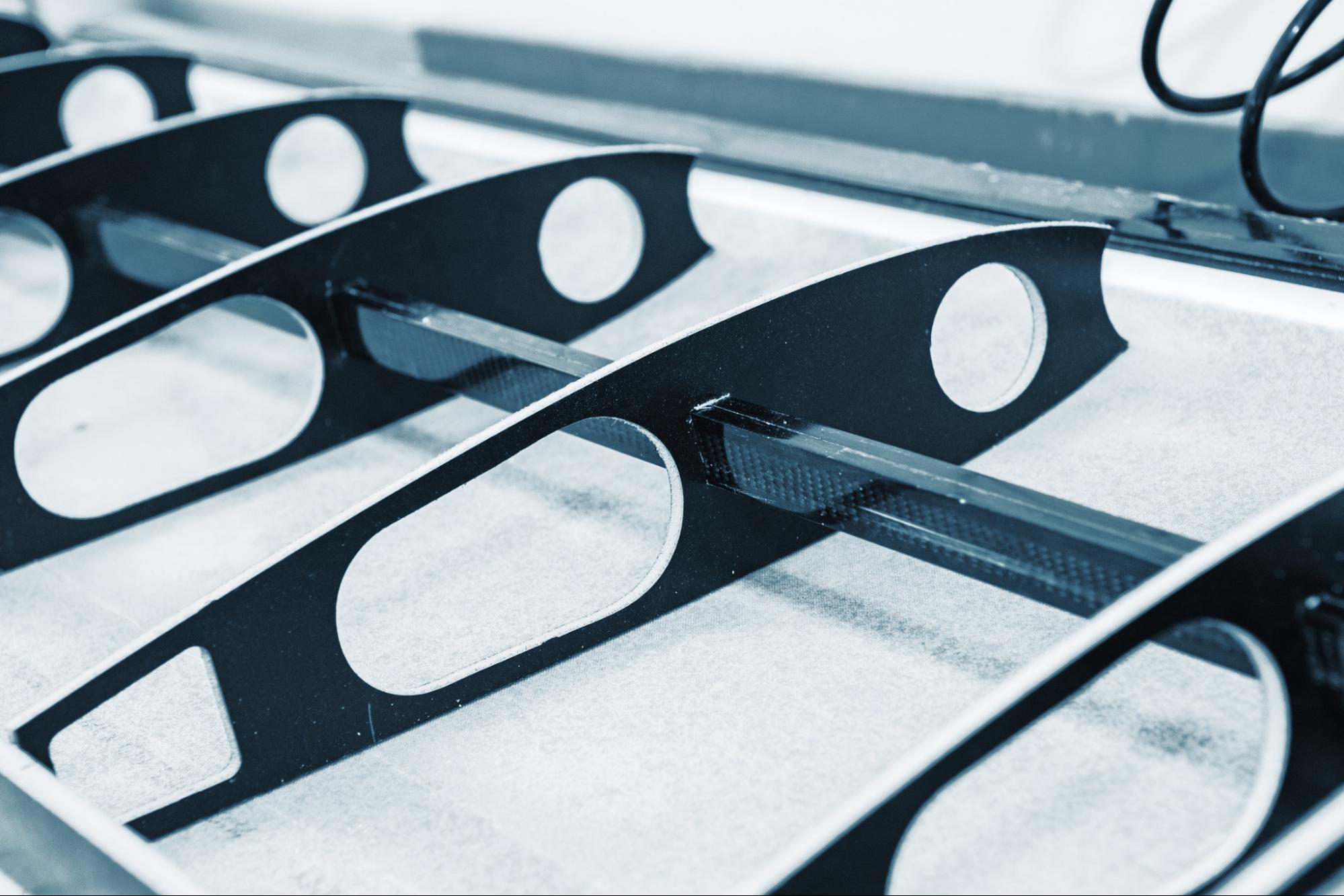
Composite materials don't behave like the metals most shops cut their teeth on. Run a standard tool through carbon fiber or fiberglass, and you'll quickly hit the same wall: delamination at the exit hole, frayed fibers instead of a clean edge, or a tool that's dulled out halfway through the job. Composites are abrasive, layered, and inconsistent in ways metal simply isn't, and that combination punishes tooling that wasn't built for it.
For shops working in aerospace, defense, and industrial manufacturing, getting composite machining right means solving three problems at once: protecting the part's structural integrity, meeting the surface-finish spec, and doing so without burning through tooling every shift. That's a tighter needle to thread than it sounds, and it's why superabrasive diamond tooling has become the standard for this kind of work.
Why Composites Fight Back
A composite part is a resin matrix reinforced with glass or carbon fiber, and that structure is exactly what makes it hard to cut cleanly. The fibers are hard and abrasive enough to wear down a cutting edge fast. The resin holding them together is comparatively soft and heat-sensitive. Push a tool through both at once, and it has to shear tough fiber while staying gentle enough not to scorch or smear the resin around it.
Technology also manufactures P.B.S.® tools in non-standard sizes and forms, so shops with unusual geometries or tight tolerances aren't stuck adapting a stock product to a custom job.
Get that balance wrong, and the failure modes show up fast: fibers pull loose instead of cutting cleanly, edges fuzz instead of finishing smooth, and heat buildup can scorch the resin matrix or weaken the bond between layers. On a load-bearing composite part destined for an aircraft, that kind of damage goes well beyond cosmetic. It can compromise the part itself.
Why Diamond is the Right Abrasive for the Job
Diamond is the hardest material available for cutting and grinding, which matters enormously against composite fiber that would chew through conventional abrasives in short order. But hardness alone isn't the whole story. What makes diamond tooling especially well-suited to composites is the control it offers: diamond can be engineered into precise particle sizes, concentrations, and bond types, which means a tool can be tuned to cut aggressively without generating the excess heat that damages resin, and to hold its geometry and edge sharpness over long production runs.
That tunability is why diamond tooling doesn't come in just one form. Different bonding methods and tool formats exist because composite work spans a wide range of operations—from high-precision drilling and routing, to aggressive stock removal, to hand-finishing a contoured surface—and no single tool technology is optimal for all of them. Understanding the strengths of each is what allows a shop to match the right diamond tool to the right stage of the job.
Electroplated Tools
The Workhorse for Drilling, Routing, and Finishing
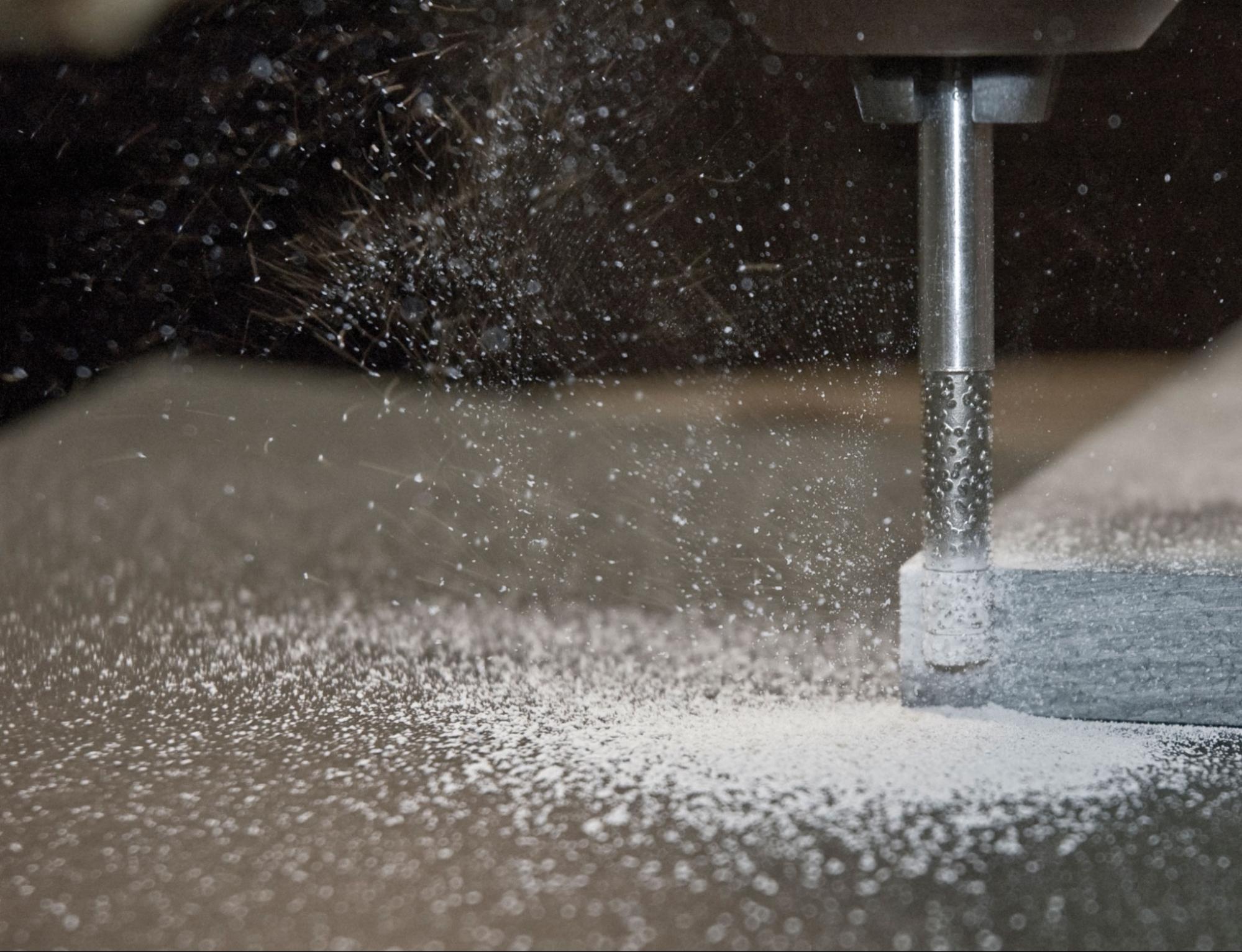
Electroplated diamond tooling deposits a single layer of diamond particles onto a tool substrate using an electrochemical process. The diamonds are mechanically locked into that layer, creating a highly abrasive cutting surface that can be shaped and profiled to tight tolerances. Because the diamond exposure is precise and consistent, electroplated tools cut aggressively without generating excess heat, which is exactly what a resin matrix needs to stay intact.
That precision is why electroplated diamond tools show up across so much composite work. Drilling fastener holes in CFRP, routing net-shape edges, deburring trimmed panels, finishing a surface to spec: electroplated tooling handles the range without requiring different technology for every step. Router bits, core drills, burs, discs, and belts all draw on the same underlying technology, simplifying processes for shops managing multiple operations on the same part. It's also a relatively fast, cost-effective way to get a high-quality finish, which matters in busy production environments where changeover time adds up.
P.B.S.® Braze
Built Specifically for Composite Grinding and Machining
Where electroplated tooling covers the broad range of drilling, routing, and finishing work, Abrasive Technology's proprietary P.B.S.® Braze process is the company's preferred technology for composite grinding and machining, particularly where speed and durability matter most. Rather than mechanically trapping diamond particles in a plated layer, P.B.S.® Braze chemically bonds each individual diamond crystal to the tool with a nickel-chrome alloy, then permanently fuses that bond through heat. The result is a tool that exposes more of each diamond crystal to the workpiece and resists particle pull-out or stripping that can shorten the life of other bonding methods. In practice, that means tools that cut faster, run cooler, and hold their edge longer under demanding conditions.
That combination makes P.B.S.® Braze especially effective on non-metallic, fiber-reinforced materials, including CFRP,GFRP, graphite epoxy, fiberglass, friction material, carbon fiber composites, honeycomb, and other composite structures common in aerospace and defense manufacturing. When a job calls for aggressive stock removal on tough composite material, or a tool that needs to hold up through deep cuts without losing its edge, P.B.S.® Braze is engineered for exactly that demand. Abrasive Technology also manufactures P.B.S.® tools in non-standard sizes and forms, so shops with unusual geometries or tight tolerances aren't stuck adapting a stock product to a custom job.
Flexible Diamond Tools: Achieving the Ideal Surface Finish
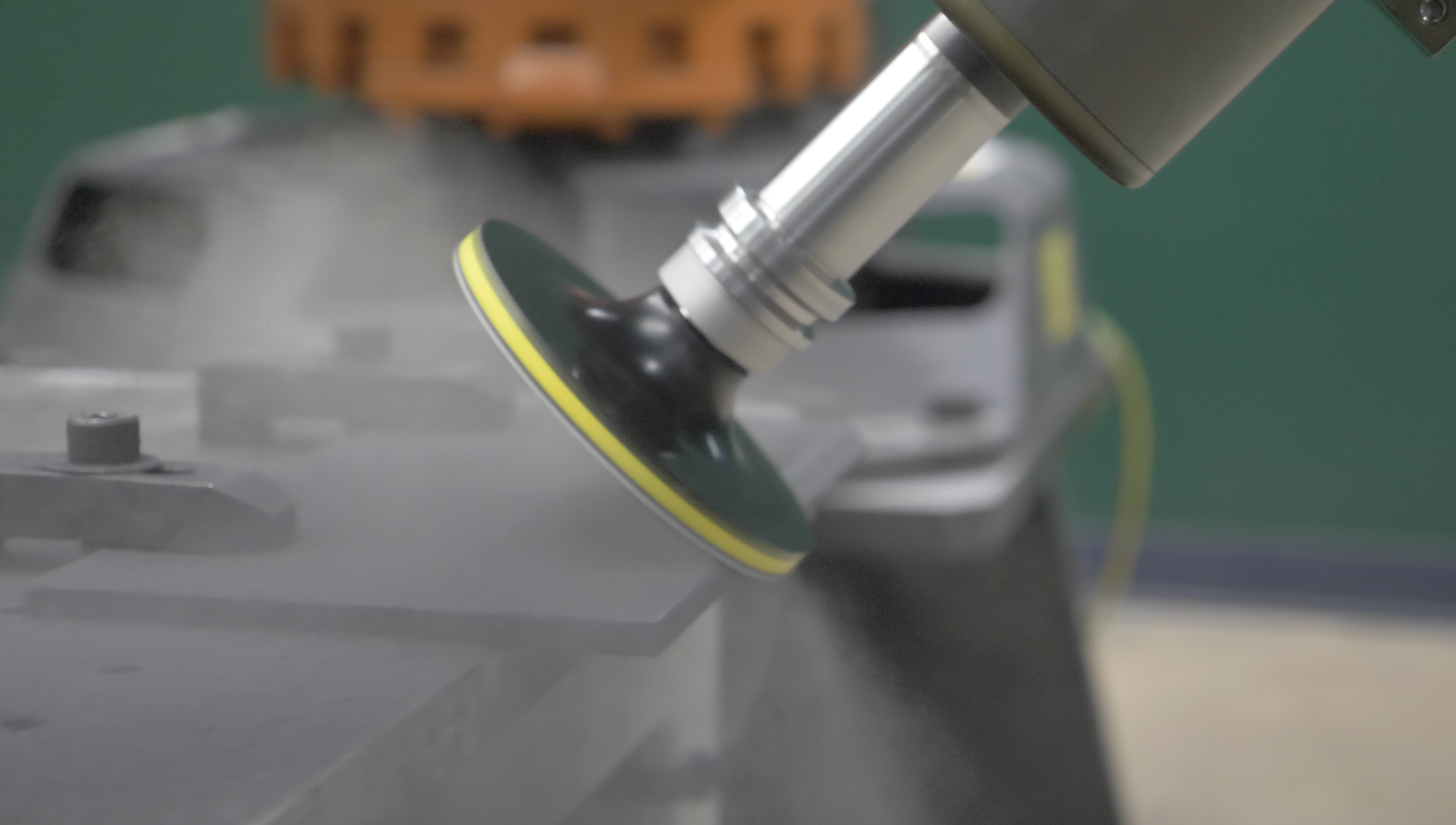
Drilling and routing get a part to shape, but reaching a true finish-grade surface on a composite part often comes down to manual or semi-automated work at the bench. This is where flexible diamond tools earn their place in the process. Built on a flexible backing rather than a rigid substrate, these tools conform to curved and contoured composite geometries in a way rigid tooling can't, making them well suited to grinding, blending, contour shaping, and fine-surface polishing.
For shops finishing composite parts by hand or with semi-automated equipment, flexible diamond tools offer a few specific advantages worth noting:
- Conformability — the flexible backing follows the part's contour, so operators can blend transitions and shape curved edges without gouging or flat-spotting the surface.
- Progressive grit options — available across a range of grit sizes, allowing a shop to step down from initial blending through to a fine polish on the same part without switching tool technologies.
- Consistent, low-heat finishing — like other diamond tooling, flexible tools cut efficiently at lower pressure, reducing the risk of scorching resin or fraying fiber during final finishing passes.
- Operator control — because they're used manually or semi-automated, they give operators fine control over problem areas—repair patches, cosmetic surfaces, and tight radii—where a fixed-path automated tool would struggle.
For shops chasing a true finish-grade surface on composite parts, flexible diamond tools are often the last—and most important—step in the process.
The Real Balancing Act
Shops often face trade-offs between strength, surface finish, and tool life. Removing material too aggressively can lead to delamination or a rougher finish than specifications require, while achieving a mirror-like surface takes more time and can slow production. Using a tool unsuited to the material accelerates wear and jeopardizes the part's structural integrity.
Matching the technology to the operation solves most of that tension: electroplated tooling for the drilling, routing, and finishing work where precision and versatility carry the day; P.B.S.® Braze for the composite grinding and machining jobs where fast, durable stock removal is the priority; and flexible diamond tools for the manual and semi-automated grinding, blending, and polishing work that gets a part to its final finish. Shops that treat these as complementary technologies, rather than forcing every application through one, tend to see the biggest gains in both part quality and tool life.
Get an Up-Close Look at CAMX 2026
Composite machining keeps getting more demanding as aerospace and defense programs push tighter tolerances and tougher material specs. That's exactly the kind of conversation that plays out on the floor at CAMX, the Composites and Advanced Materials Expo, running September 22–24, 2026, at the Georgia World Congress Center in Atlanta. It's one of the largest gatherings of composites manufacturers, engineers, and suppliers in North America. Abrasive Technology will be there at Booth Z59.
If delamination, edge quality, or a tool that won't hold up is slowing down your composite program, that's worth a real conversation. Catch us at an upcoming composites industry event, or reach out directly to talk through whether electroplated tooling, P.B.S.® Braze, flexible diamond tools, or a combination of these is the right fit for your material and your tolerances. Contact us at 740-548-4100 or use our contact form to find the ideal tools you need.

Custom Solutions
For Your Unique
SuperAbrasive Needs

