

What Manufacturers Are Asking About Precision Grinding
"Why is this wheel breaking down before it should?”
"What's preventing me from hitting this tolerance consistently?”
"We've tried three different off-the-shelf tools on this material, and none of them work."
Whether it's a shop working through a production issue on a Tuesday morning or a conversation happening on a trade show floor, the theme is always the same. Standard tooling is being pushed against materials, tolerances, and production volumes it was never built for.
The Core Trade-Off
Precision grinding lives at the intersection of three competing demands: holding tight dimensional tolerances, minimizing tool wear, and managing heat generation — all while working with materials that don't always play nicely with generic abrasives. Push too hard for tolerance and you accelerate wear. Try to extend wheel life and you risk thermal damage or inconsistent finish. Add a difficult-to-grind material into the mix, and off-the-shelf wheels often become the bottleneck rather than the solution.
While many applications can run just fine on off-the-shelf catalog tools, precision grinding isn't one of them. That's where shops start losing time, wheels, and consistency.
Where Superabrasives Come In
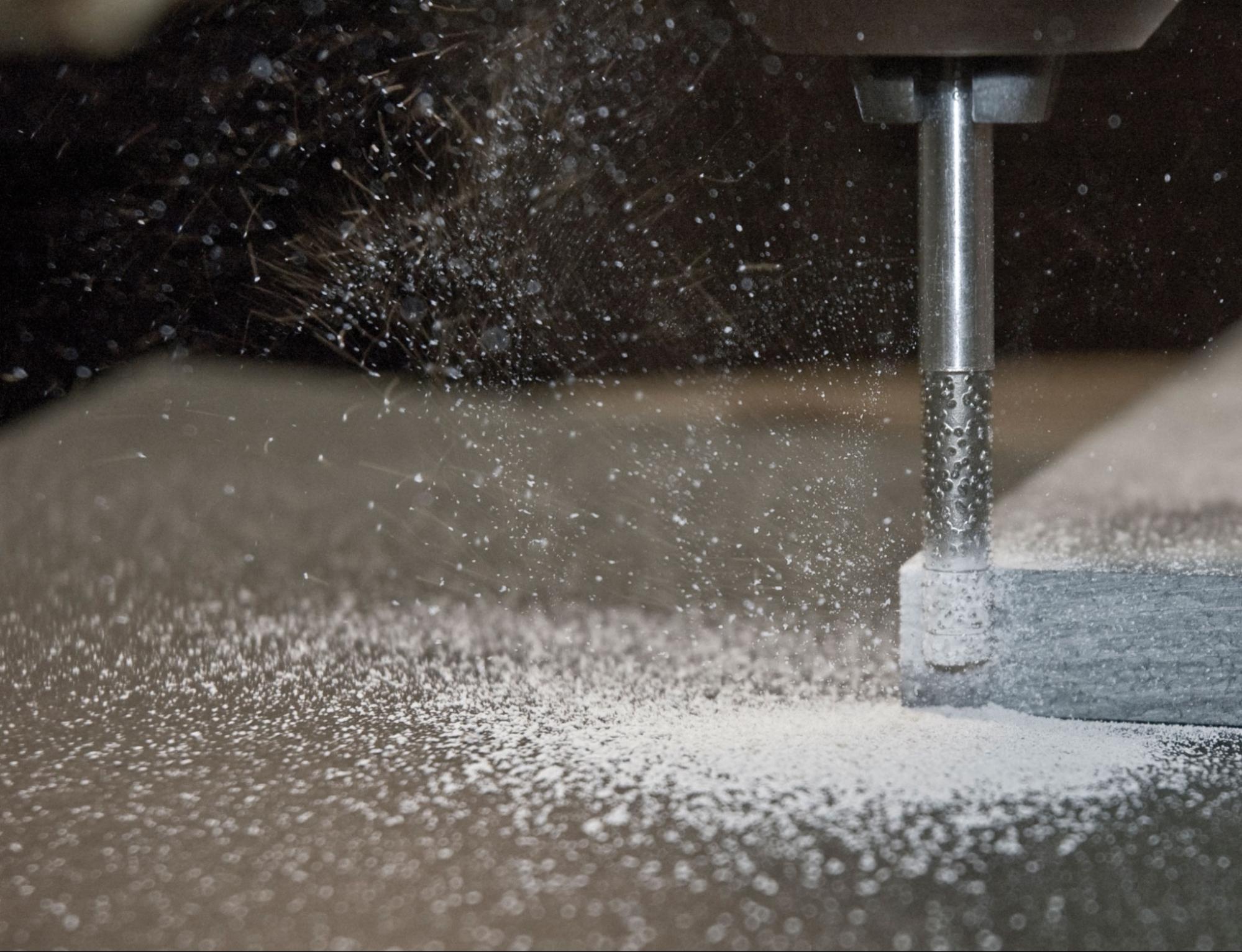
When it comes to a specialized application, the tool is engineered around the specific application, the material, the tolerance, and the production volume it actually needs to run.
Tolerance. Abrasive type, grit size, concentration, and bond hardness are selected to match the exact material and geometry being ground, so the wheel holds its form and delivers a repeatable finish instead of drifting out of spec as it wears.
Tool wear. Superabrasives like diamond and CBN are dramatically harder and more durable than conventional abrasives, so a wheel matched to the application wears predictably and lasts through the production run, rather than breaking down early and forcing constant dressing or replacement.
Heat generation. Bond systems and wheel specifications can be tuned to the material's thermal properties, keeping heat at the grind zone under control and reducing the risk of burn, warping, or metallurgical damage, especially with heat-sensitive materials.
It's important to note that even the right superabrasive solution can underperform if the surrounding process isn't dialed in. Machine setup, spindle condition, dressing practices, and feed rates all play a role in how your operation performs. The same thing can be said about coolant. Whether the right type is being used, delivered at the right pressure, and reaching the actual grind zone. The last thing, but just as important is the operator running the machine. Running a new tool the same way as the old one, without adjusting for its differences, can undercut even a well-engineered solution. That's where our Abrasive Technology team works with you, from developing the tool to getting it dialed into your process for maximum efficiency.
Brazed or Electroplated? Matching the Tool to the Material
Composite questions keep showing up more frequently as CFRP, GFRP, honeycomb structures, and reinforced ceramics move from niche applications to standard construction across commercial and military platforms. At the same time, shops working in metals and other demanding materials are asking the same core question in a different form, which bonding method (brazed or electroplated) fits the job? The two are very different and each one is engineered for a different category of material and application.
P.B.S.® Brazed Tools: Built for Composites and Non-Metallic Materials
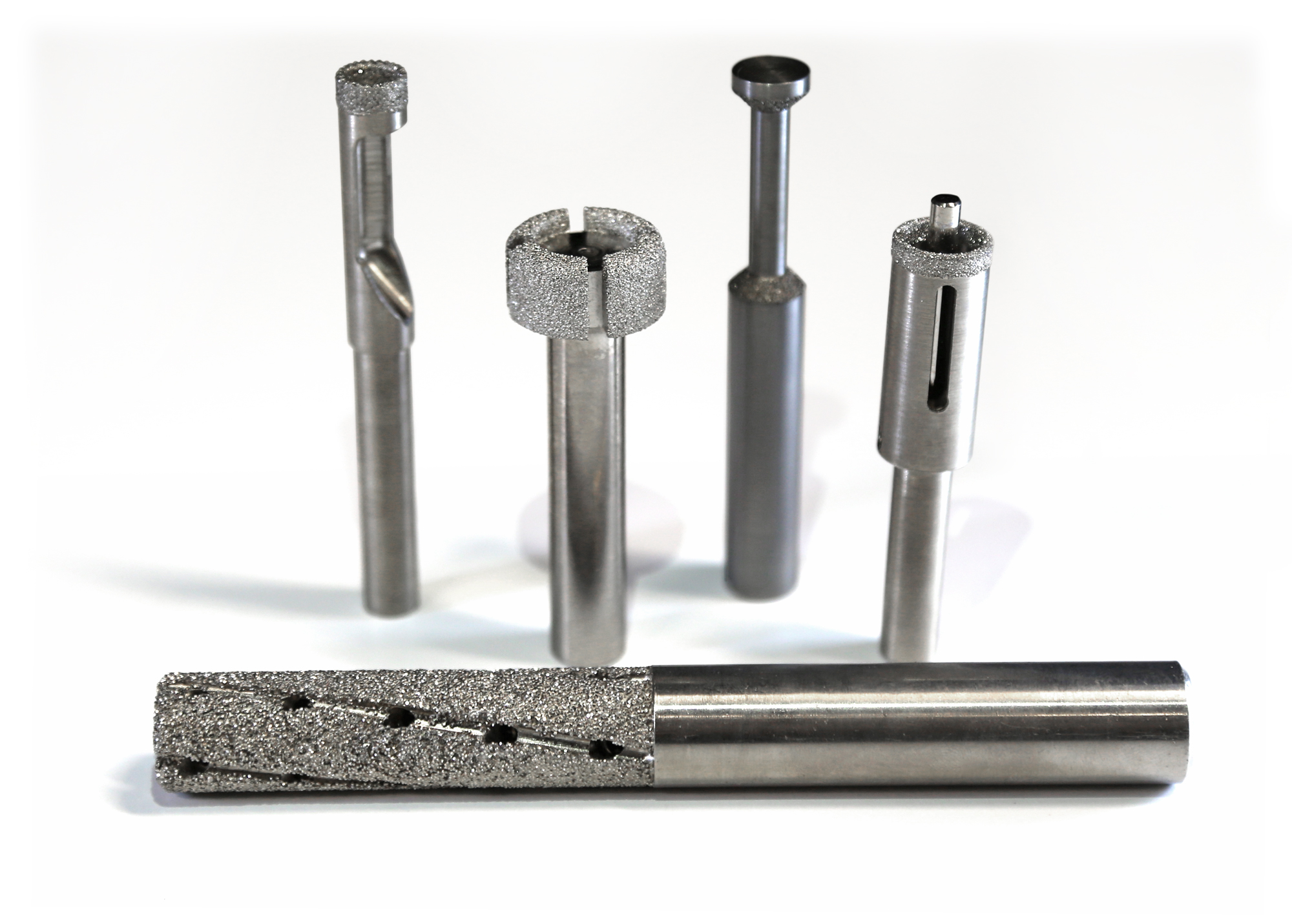
Rather than trapping abrasives in a plated layer, P.B.S.® Braze fuses individual diamond particles directly to the tool through brazing, producing significantly higher diamond exposure and virtually no particle pull-out.
Best suited for: CFRP, GFRP, honeycomb structures, reinforced ceramics, and other abrasive, non-metallic materials that load and glaze conventional tooling. On these materials, higher diamond exposure means faster cuts, cooler operation, and resistance to the loading and glazing that shortens the life of conventional wheels. Shops working with composites for the first time often lose tools prematurely or produce poor surface finishes with standard tooling — brazing was developed specifically for this category.
Electroplated Tools: Built for Close-Tolerance Form Grinding in Metals
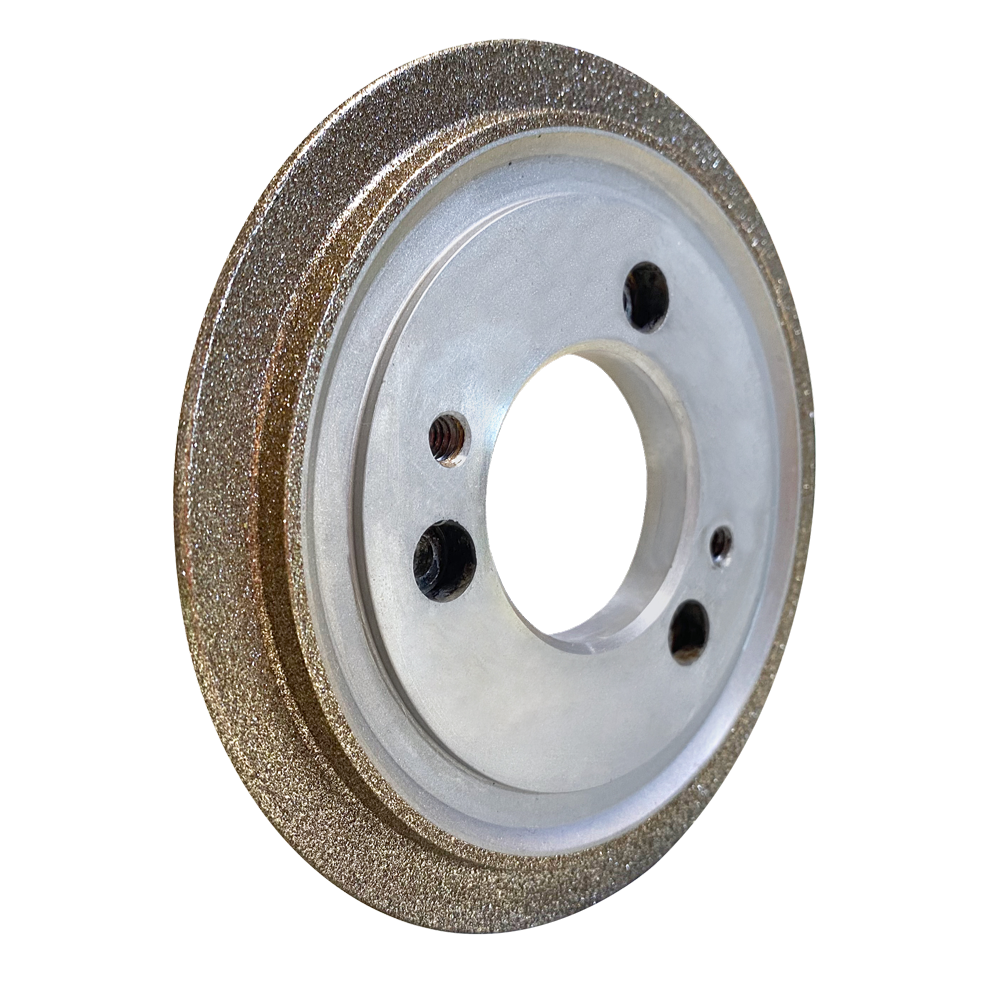
Electroplated diamond and CBN tooling traps abrasive in a single plated layer, giving it a precise, consistent form and an aggressive cut without the thermal damage that dulls conventional wheels.
Best suited for: short production runs and close-tolerance form grinding on metals and metal alloys, where the abrasive layer geometry needs to stay consistent from the first cut to the last. That consistency means less time dressing and more time running parts. When a wheel does eventually wear, the core can be stripped and replated instead of replacing the whole tool, which extends its usable life and lowers cost-per-part over time. Form wheels come up alongside electroplated tooling for the same reason: when a component has a complex contoured profile, the tool must reproduce that geometry reliably across thousands of parts.
Abrasive Technology's precision form specialists work directly with manufacturers to engineer wheels for these applications, tailored to the specific material, machine setup, and tolerance requirements. For finishing and contouring work where rigid tooling isn't the answer, the Flexible Bond line of diamond belts, discs, and hand pads fills the gap.
Let the Conversations Continue at IMTS and CAMX
It's fitting that these are the same questions we expect to hear this September, first at IMTS in Chicago and then at CAMX in Atlanta. IMTS draws close to 90,000 people to McCormick Place every two years, and the conversations on that floor tend to be a more reliable signal of what manufacturing is actually working through than what the industry press says. Just days after IMTS wraps, Abrasive Technology's team heads to Atlanta for CAMX 2026 (the Composites and Advanced Materials Expo), running September 22–24 at the Georgia World Congress Center. CAMX is North America's largest gathering of composites professionals, drawing scientists, engineers, and manufacturers working across aerospace, defense, mobility, and infrastructure.
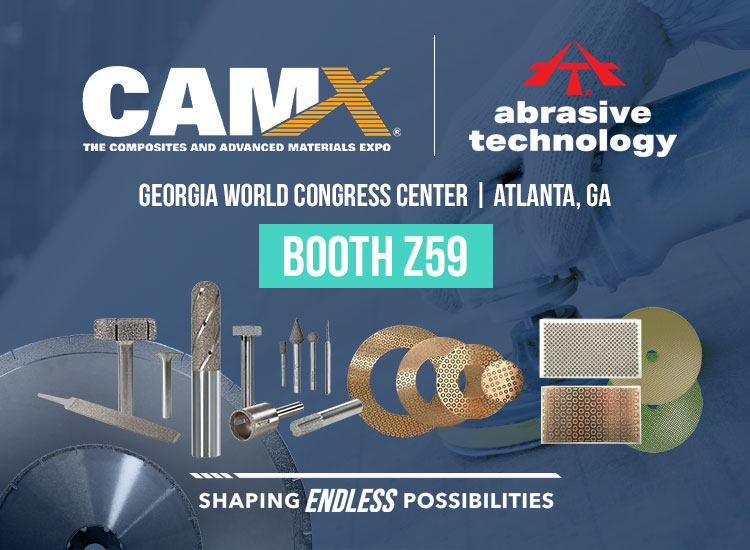
We're looking forward to those conversations. As carbon matrix composite content in aircraft, defense platforms, and lightweight structures grows, so does the demand for tooling that can machine these materials to spec, at speed, without damage — and those are exactly the conversations we expect on both show floors. The questions manufacturers bring rarely have simple answers, because every material, geometry, and production run comes with its own constraints. What doesn't change is where the answers come from: engineering built around your specific application.
Abrasive Technology designs custom superabrasive solutions around the specific materials, geometries, and tolerances your program demands. Contact us at 740-548-4100 or use our contact form to find the tools you need.

Custom Solutions
For Your Unique
SuperAbrasive Needs

